
The journey to Everest Base Camp represents one of travel’s greatest pilgrimages—a bucket-list adventure that draws thousands of trekkers annually to the roof of the world. While the traditional roundtrip trek demands roughly two weeks of challenging hiking, a revolutionary option has transformed this iconic experience: the Everest Base Camp Trek with helicopter return. This innovative approach combines the immersive cultural journey of the classic trek with the breathtaking aerial perspective of an Everest helicopter tour, creating the perfect balance of adventure and convenience.
The Classic Journey Reimagined
The traditional Everest Base Camp trek requires approximately 12-14 days of rigorous hiking through the Khumbu region of Nepal. Trekkers gradually ascend through picturesque Sherpa villages, across suspension bridges spanning dramatic gorges, and along ancient trading routes, all while acclimatizing to the increasingly thin air. This methodical approach culminates in the emotional arrival at Everest Base Camp (5,364m/17,598ft) and the pre-dawn hike to Kala Patthar (5,545m/18,192ft) for unobstructed views of Mount Everest’s summit.
However, the descent follows the same path in reverse—retracing steps through familiar terrain when energy reserves are at their lowest. This is where the helicopter return option transforms the experience. After reaching the pinnacle of the trek, instead of a multi-day descent, trekkers board a helicopter for a spectacular 45-minute flight back to Kathmandu or Lukla, offering extraordinary aerial views while saving valuable time and energy.
Benefits of the Helicopter Return Option
Time Efficiency
The helicopter return option reduces the traditional 12-14 day journey to approximately 8-10 days, making this iconic adventure accessible to travelers with tighter schedules. This efficiency doesn’t compromise the trekking experience—it simply eliminates the repetitive descent phase.
Physical Consideration
The downhill journey taxes different muscle groups and joints, often causing unexpected discomfort even for seasoned hikers. The helicopter return option allows trekkers to preserve the physical and mental triumph of reaching Base Camp without the subsequent strain of descent.
Aerial Perspective
Perhaps the most compelling advantage is the unparalleled bird’s-eye view of the Himalayas. The helicopter flight provides a completely different perspective of the world’s highest mountains—a breathtaking panorama impossible to appreciate from ground level. This aerial tour reveals the true scale and majesty of the Himalayan range, with Mount Everest, Lhotse, Nuptse, and countless other peaks spread out before you.
Medical Safety
For trekkers experiencing altitude-related complications or injuries, the helicopter return provides a swift evacuation option. This added safety feature offers peace of mind throughout the journey, knowing that medical assistance is more readily available if needed.
The Trekking Experience
The trek begins with the famous flight to Lukla’s Tenzing-Hillary Airport (2,860m/9,383ft), considered one of the world’s most exciting landing strips. From there, the trail winds through the verdant Dudh Kosi River Valley before climbing to Namche Bazaar (3,440m/11,286ft), the bustling hub of Sherpa culture and commerce.
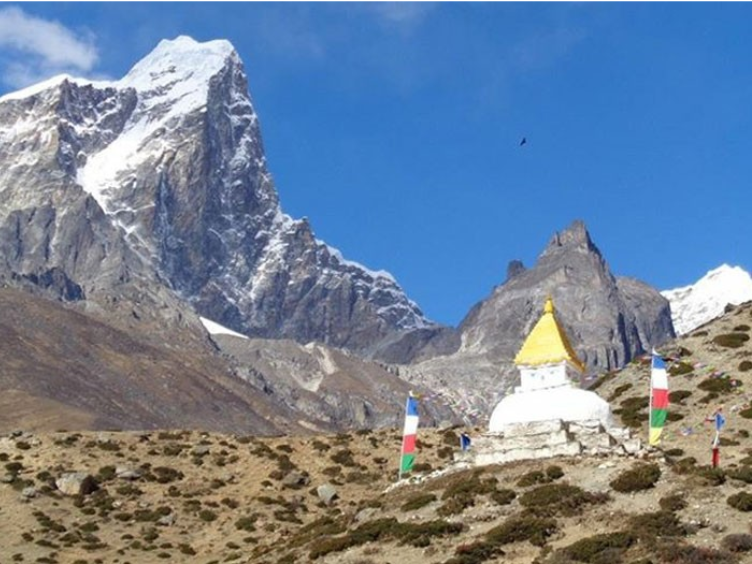
After essential acclimatization days, the route continues through traditional villages like Tengboche, home to an important Buddhist monastery, and Dingboche, where trekkers rest while adapting to the thinning air. Each day brings new terrain—from lush rhododendron forests at lower elevations to the stark, glacial landscapes approaching Base Camp.
Trekkers pass memorial sites honoring those who lost their lives on Everest, a sobering reminder of the mountain’s formidable nature. The final push to Base Camp traverses the Khumbu Glacier’s moraine, where enormous ice seracs and deep crevasses create an almost lunar landscape.
Upon reaching Base Camp, trekkers experience the remarkable atmosphere of this temporary city of expedition tents (during climbing seasons) set against the backdrop of the Khumbu Icefall. While Everest’s summit remains hidden from this vantage point, the early morning hike to Kala Patthar rewards with unobstructed views of the world’s highest peak.
The Helicopter Tour Component
The helicopter departure typically occurs from Gorak Shep, the final settlement before Base Camp. As the helicopter lifts off, trekkers are treated to an immediate transformation of perspective. The Khumbu Glacier, which appears as a chaotic jumble of ice and rock while trekking, reveals its true serpentine nature from above.
The flight path often includes close views of Everest’s neighboring peaks—Nuptse, Lhotse, and Ama Dablam—before descending through the valleys toward Lukla or continuing directly to Kathmandu. Many tours include a brief landing at a scenic viewpoint like Kongde or Syangboche, where passengers can enjoy breakfast or refreshments with panoramic mountain views.
Practical Considerations
Best Season
While the trek is possible year-round, the optimal seasons are pre-monsoon (March to May) and post-monsoon (September to November). These periods offer stable weather for both trekking and helicopter operations, though spring adds the vibrant color of rhododendron blooms.
Physical Preparation
Despite eliminating the descent, this trek remains physically demanding. The gradual ascent to altitudes over 5,300 meters requires good cardiovascular fitness and prior hiking experience. A dedicated training program in the months before departure significantly enhances enjoyment of the journey.
Cost Factors
The helicopter return option increases the overall expedition cost, typically adding $1,000-$1,500 per person depending on group size. However, when considering the saved accommodation and meal expenses of extra trekking days, plus the unique aerial experience, many travelers find this premium justifiable.
Weather Considerations
Helicopter operations depend on favorable weather conditions. Flexibility in scheduling is essential, as flights may be delayed due to mountain weather patterns. Most reputable tour operators build contingency days into their itineraries to accommodate potential delays.
Environmental Impact
Conscious travelers should note that helicopter flights have a higher carbon footprint than trekking. However, when balanced against the reduced impact of fewer nights in high-altitude lodges (where heating often relies on burning local resources), the overall environmental equation becomes more complex. Many operators now offer carbon offset programs to mitigate the environmental impact of the helicopter component.
Conclusion
Everest Base Camp Helicopter Tour with helicopter return represents the evolution of Himalayan adventure travel—honoring the traditional trekking experience while embracing modern capabilities. This hybrid approach delivers the cultural immersion, physical achievement, and spectacular landscapes of the classic journey while adding the unique perspective of an aerial tour and the convenience of a rapid return.
For travelers seeking to maximize their Himalayan experience within a limited timeframe, or those wishing to experience the grandeur of the world’s highest mountains from multiple perspectives, this innovative approach offers the ideal solution. The memories created—from the camaraderie of teahouse evenings to the triumph at Base Camp and the breathtaking helicopter flight—form an unparalleled mosaic of adventure that will last a lifetime.
As the Everest region continues balancing tradition with innovation, this combination of ancestral pathways and modern aviation exemplifies how thoughtful development can enhance access to one of the planet’s most remarkable landscapes while preserving the essence of the journey itself.