
In the chaos of an emergency at sea, the ability to communicate instantly and clearly isn’t just useful — it’s essential. And when all else fails — power, antennas, systems — one tool continues to prove its reliability time and again: the GMDSS handheld radio.
Whether you’re managing a commercial vessel, charter fleet, or training program, GMDSS VHF radios are not just equipment — they are your lifeline.
Let’s dive into why these radios are mandatory, how they fit into the broader GMDSS system, and why your vessel — large or small — can’t afford to be without them.
What is GMDSS and Why Does It Matter?
The Global Maritime Distress and Safety System (GMDSS) is an internationally agreed-upon system that uses satellite and terrestrial radio communication to enhance maritime safety. It’s the reason mayday calls don’t vanish into the void — and the reason coastguards around the world respond in minutes, not hours.
GMDSS includes:
EPIRBs (Emergency Position Indicating Radio Beacons)
SARTs (Search and Rescue Transponders)
NAVTEX and satellite terminals
And, crucially — handheld VHF radios with DSC
Handheld radios are the most direct, human-controlled piece of this network.
Why Handheld GMDSS Radios Are Indispensable
Let’s make one thing clear — these aren’t your typical walkie-talkies.
Models like the GMDSS V100 and V100 Kit available at Gaelix Marine Service are SOLAS-compliant, waterproof, floatable, and built specifically to:
Transmit distress calls on Channel 16
Send Digital Selective Calling (DSC) alerts
Operate independently from your vessel’s power systems
Survive extreme weather and rough handling
Provide dedicated emergency communication in lifeboats or rafts
These radios are the go-to tool in abandon-ship scenarios, collisions, fires, or engine failures where fixed systems may be compromised.
Use Cases That Matter
- Fire on board: Fixed radios may fail due to power loss. GMDSS handhelds provide instant comms from safe zones or evacuation points.
- Abandoning ship: Radios go with the crew to the life rafts, maintaining communication with rescue assets.
- Training & drills: Simulate real-world comms without risking operational systems.
- Crew transfers & tenders: Keep constant contact with crew working away from the bridge.
Why Commercial Operators Choose Them
It’s not just about compliance — it’s about professionalism. Fleet managers know that:
Training crews with handhelds builds faster reaction skills
Having spares improves inspection readiness
Redundancy builds resilience, especially in charter or multi-vessel operations
And let’s be honest: when you hand a new skipper or mate a GMDSS handheld, it sends a clear message — “We take safety seriously.”
What to Look For in a Professional GMDSS Radio
SOLAS and MED certification
Fully waterproof and buoyant casing
Dedicated emergency buttons
Long battery life, ideally with a spare pack included
Clear, high-volume audio
The GMDSS V100 Kit includes all of this — plus a charging base, emergency antenna, and durable case — making it ideal for vessels of all sizes.
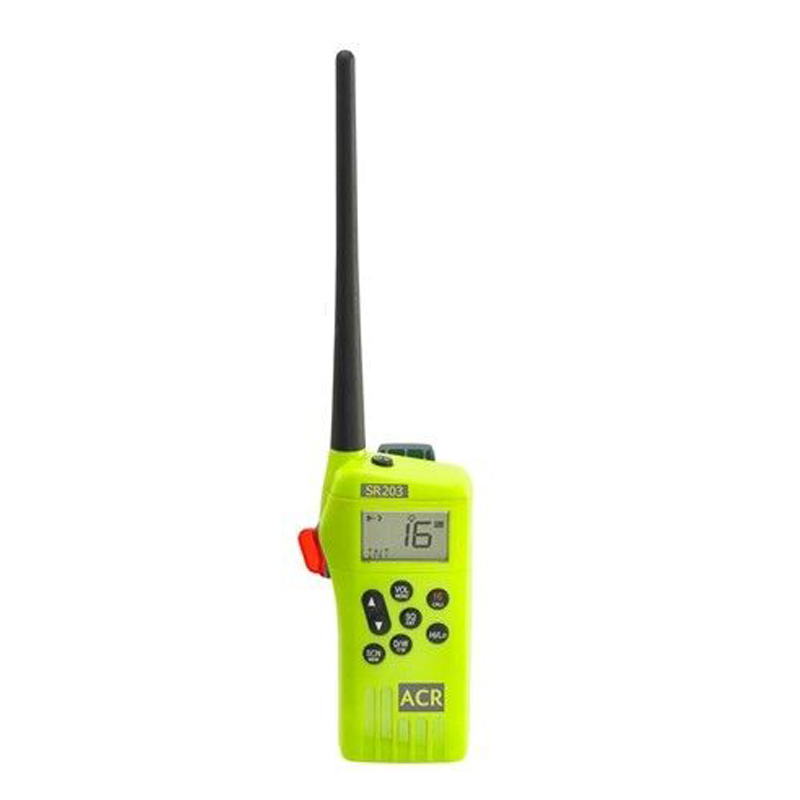
See the full specs in our Emergency Equipment Devices section.
One Radio = One More Line of Survival
At Gaelix Marine Service, we help maritime professionals across Europe equip their teams with certified GMDSS radios, ensuring that communication never fails — even when everything else does.
We stock:
GMDSS VHF handhelds with DSC
Full kits with accessories
Rechargeable batteries and chargers
Durable waterproof carry cases
AIS-compatible integration options
Final Thought
In the world of maritime safety, no signal is more powerful than the one that’s heard. GMDSS handheld radios make sure your voice is never lost, your crew is never isolated, and your ship is never silent when it matters most.
Whether you’re running a yacht, a training center, or a commercial vessel, a handheld GMDSS radio may be the most important tool no one sees — until everything depends on it.